
Related: Redefining Learning and Knowledge vs Skills in Curriculum Design. See our curriculum design work.
Children are born inquirers. From the moment of birth, they explore, question, and build relationships with the world around them. The task before educators and parents is not to instil curiosity, but to protect and channel what is already innate — helping young learners immerse themselves in a lifelong cycle of inquiry.
Listening and the physical environment
Young learners need to be heard. When adults create a stimulating, provoking physical environment, children are empowered to explore independently and master their senses. This aligns closely with Lev Vygotsky’s socio-cultural theory of learning, which holds that children construct understanding through guided interaction with their environment and more knowledgeable others — scaffolding their journey toward independent mastery within their Zone of Proximal Development.
Voice, agency, and self-worth
Children must know their self-worth to develop self-efficacy and confidence. Involving them in decisions that concern them — as affirmed by the child rights charter — builds the practice of making small choices early, shaping confident, thinking adults.
Imagination as the seed of critical thought

Storytelling and imaginative play let children paint their own worlds — parents, teachers, and peers become characters in narratives that stretch across intergalactic spaces. This imaginative capacity is not incidental; it is the scaffolding for critical, logical thinking, eventually enabling children to create and invent.
Learning outdoors
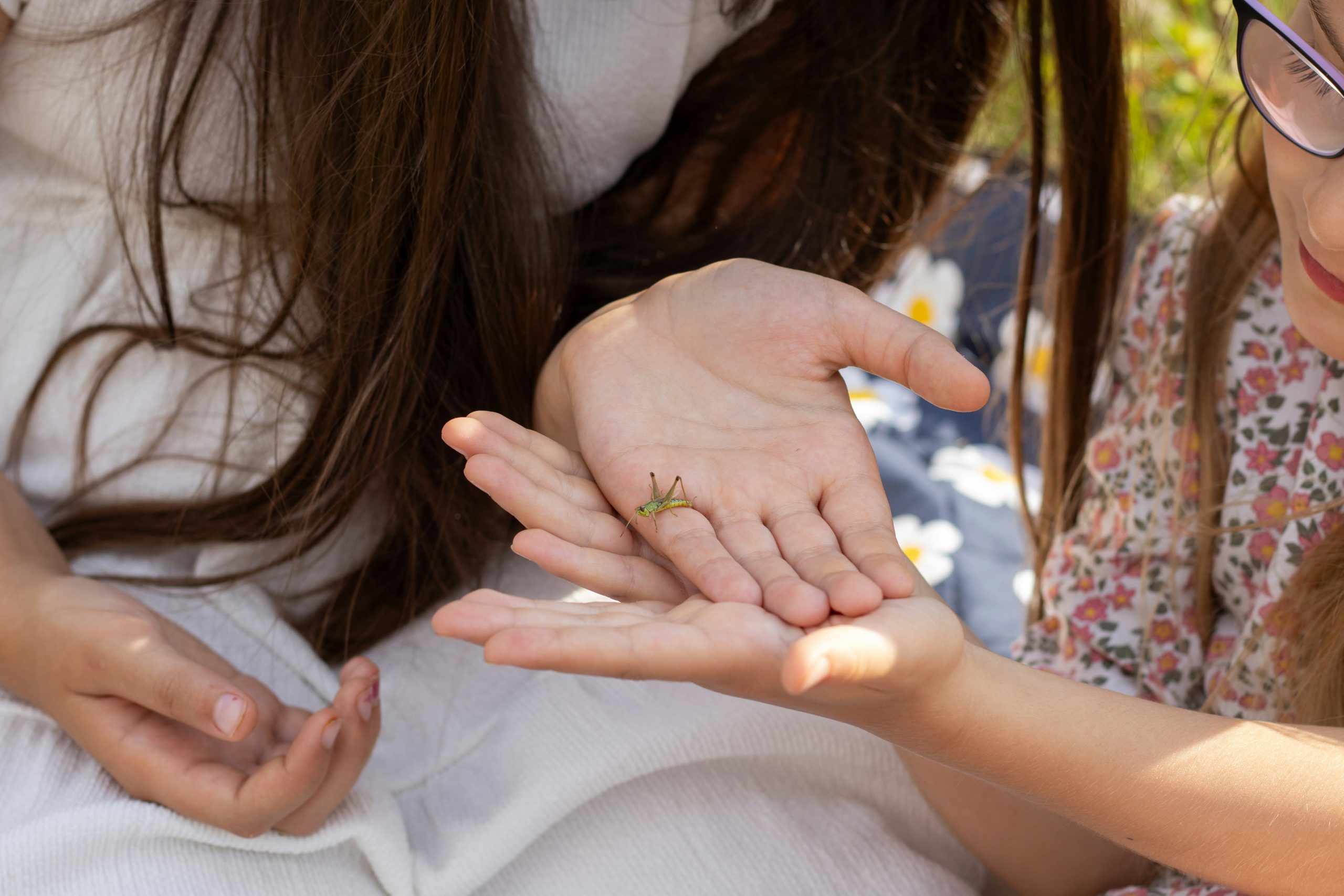
Outdoor environments offer irreplaceable learning. Playing with natural materials — mud, leaves, twigs, stones — builds fine motor skills and offers therapeutic value, in contrast to the increasingly sterile indoor environments many children now inhabit. Outdoor spaces also grant children autonomy: they choose what to build and explore, often at a remove from direct adult supervision, gaining privacy and space to be authentically themselves. This unstructured freedom supports the sensory, real-world experiences that current thinking on 21st-century learning identifies as essential.

Agentic engagement through authentic tasks
Real, challenging tasks — not simplified simulations — give children a genuine sense of achievement. Whether it’s fireless cooking evolving into supervised fire cooking, or other ‘grown-up’ responsibilities, adults must model confidence while allowing children room to attempt difficult tasks themselves. This mirrors Maria Montessori’s emphasis on purposeful, real-world work as the engine of a child’s independence and self-construction.
What this means for the Foundational Stage under NEP 2020
For Indian schools, none of this is abstract. NEP 2020 restructured school education into a 5+3+3+4 pattern, and the first of those stages — the Foundational Stage — covers ages three to eight. That is precisely the span described above, and for the first time it brings early childhood care and education inside the formal school system rather than leaving it to sit outside.
The National Curriculum Framework for the Foundational Stage, released in October 2022, is unusually explicit about method. It places play at the centre of the curriculum — not as a reward that follows the real work, but as the mechanism through which the work happens. It also organises its curricular goals around panchakosha vikas, the five-sheath model drawn from the Taittiriya Upanishad: physical development (sharirik), life energy (pranik), emotional and mental development (manasik), intellectual development (bauddhik), and spiritual development (chaitsik). A school leader reading the sections above will recognise most of them already: environment, voice, imagination, outdoor autonomy and authentic work map onto those five sheaths with very little translation needed.
The tension schools are actually managing
Running alongside the NCF is NIPUN Bharat, launched in July 2021, which set a hard deadline: every child attaining foundational literacy and numeracy by the end of Grade 3 by 2026-27. That is the academic year now underway.
Here is where school leaders feel the strain. A time-bound literacy and numeracy target exerts steady pressure toward the things that look like progress on a tracker — worksheets, drilling, measurable output early. The curriculum framework governing the same children asks for the opposite: play, exploration, unstructured outdoor time, real tasks with uncertain outcomes. Both instruments are official. Both apply simultaneously.
The resolution is not to split the difference but to recognise that the framework already answers the question. Foundational literacy is not built by accelerating formal instruction into ages where it does not belong; it is built on oral language, vocabulary, sustained attention and the confidence to attempt something difficult — every one of which is developed through exactly the play-based, agentic practices described above. Schools that treat the FLN deadline as a reason to abandon play tend to produce children who can decode text but not comprehend it. The pressure is real. The trade-off is largely false.
What the resolution does demand is teachers confident enough to run a play-based classroom and defend it to anxious parents — which makes this, like most policy questions in Indian education, a teacher capacity question before it is a curriculum question.
When does early childhood end?
Officially, the early years span birth to age eight. But the disposition this period cultivates — curiosity, confidence, and the drive to inquire — should never expire. The goal of early education is not to complete a stage, but to launch a trajectory: a lifetime of inquiry that begins in the sandbox and never truly ends.

Comments on your Post
On “Nurturing Lifelong Inquirers: The Foundations of Early Learning”