
Part of our NEP 2020 series. Also read: what changes for Classes 6–8, the ten bagless days and teacher capacity. Need help with timetables and staffing? See our NEP 2020 implementation support.
Three days ago, a Parliamentary committee said out loud what many schools have been experiencing quietly since Class 6 rolled out its third-language requirement: there wasn’t enough time to prepare. The Tenth Report of the Committee on Estimates, presented to the Lok Sabha on August 12, found that recruitment of language staff, availability of study material, and clarity on language selection had all lagged the mandate itself — producing, in the committee’s words, real stress for students, teachers, parents, and school administrators alike. For a policy built around flexibility and choice, the gap between what schools were promised and what actually arrived on time is worth understanding properly.
What the formula actually requires
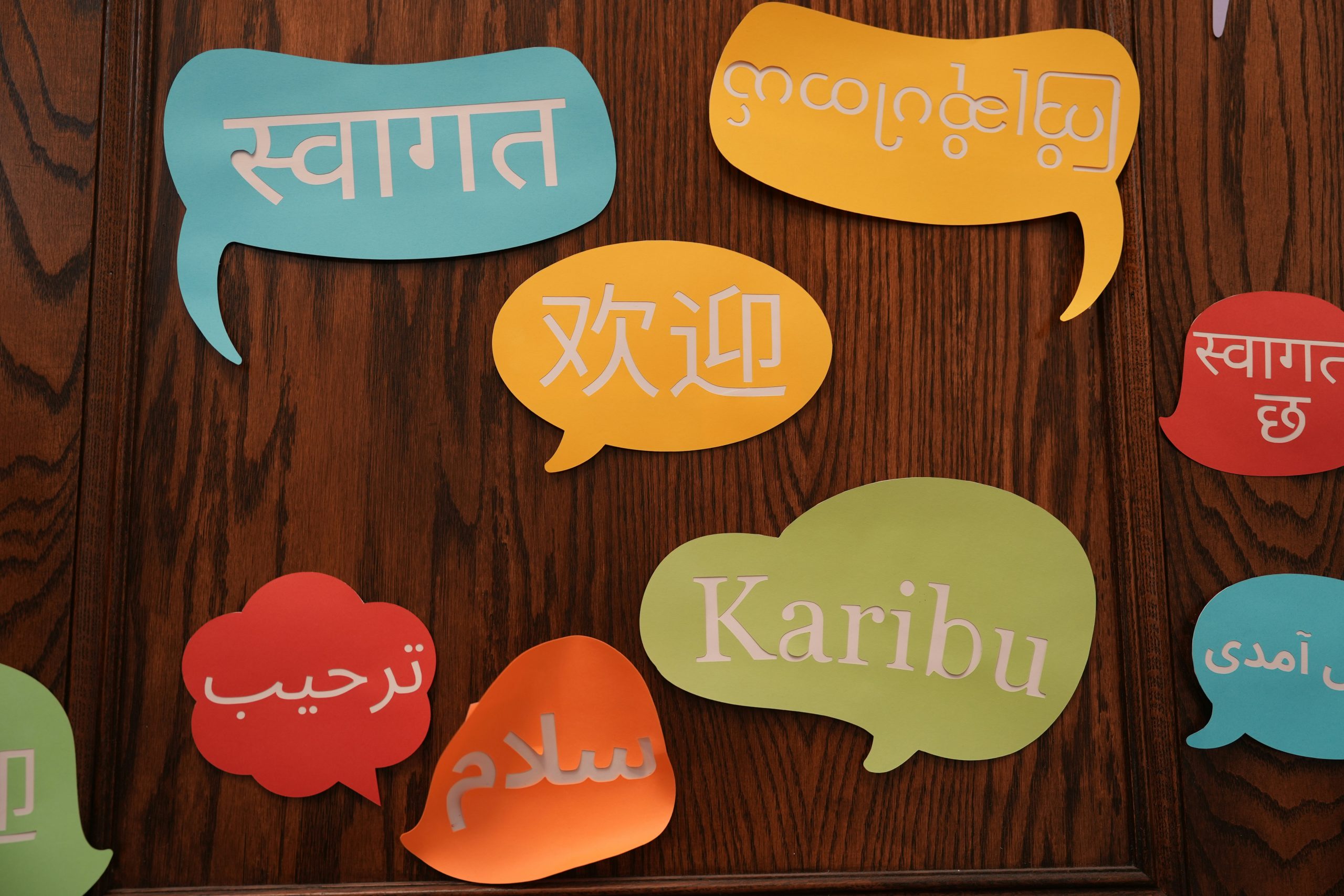
The three-language formula isn’t new to NEP 2020 — it dates to the 1968 National Policy on Education and was carried forward largely unchanged in 1986. What NEP 2020 did was reaffirm it with a stronger emphasis on flexibility: students learn three languages, at least two of which must be Indian, with states, schools, and students themselves choosing which ones. No language is meant to be imposed. Wherever possible, the medium of instruction is supposed to be the home language or mother tongue at least through Class 5, and preferably through Class 8, per the National Curriculum Framework for School Education (NCF-SE) 2023. The ministry has also introduced an “R1, R2, R3” naming convention to organise how the three languages are sequenced through a student’s schooling, with reporting indicating CBSE’s revised Class 6 scheme treats English as an optional slot alongside the two-Indian-language requirement rather than an automatic default.
The infrastructure that has actually shown up
To be fair to the ministry, the committee’s report wasn’t a story of neglect — it explicitly credited extensive groundwork. Core-subject textbooks in mathematics, science, and social science have been translated into all 22 scheduled languages. The “Jaadui Pitara” play-based learning kits now exist in 22 languages. A nationwide language-exposure programme called Bhasha Sangam has been rolled out, alongside 121 mother-tongue language primers developed with the Central Institute of Indian Languages. Kendriya Vidyalaya Sangathan has been hiring contractual local-language teachers to plug staffing gaps directly. None of that is trivial infrastructure to stand up in a few years.
Where the timeline broke down
The problem the committee flagged is sequencing, not intent. Third-language instruction began from Class 6 onward before schools had reliable answers to three basic operational questions: who teaches it, what materials they teach from, and how the language gets chosen in the first place. The committee’s own recommendations are telling — it asked the ministry to speed up textbook translation and distribution, help state boards recruit language teachers specifically at the foundational and preparatory stages, and build a proper state-wise logistics plan so materials reach rural and government schools before term starts, not partway through it. Those are the recommendations of a body that sees strong policy design paired with a rollout that outran its own supply chain.

What this means for a school planning ahead
The practical lesson isn’t to wait for state guidance to arrive before acting — the committee’s findings suggest that guidance has consistently trailed the deadlines it’s meant to support. Schools that have handled this transition more smoothly tend to draw directly on the free NCERT and CIIL materials already published rather than waiting on or commissioning their own, and they treat the mother-tongue medium-of-instruction shift as a multi-year staffing plan rather than a single-year switch. It’s also worth noting that the formula remains a source of genuine political disagreement in some states — Tamil Nadu, in particular, has opposed it since well before NEP 2020, on grounds that it functions as de facto Hindi promotion regardless of its stated flexibility — while the policy’s supporters point to the no-imposition language as evidence that choice, not compulsion, is the actual design. That debate isn’t going to resolve at the school level. What is resolvable at the school level is making sure staffing and materials are in place before the mandate lands, rather than after.
Further reading

Comments on your Post
On “The Third Language Gap: What a New Parliamentary Report Reveals About NEP’s Formula”