
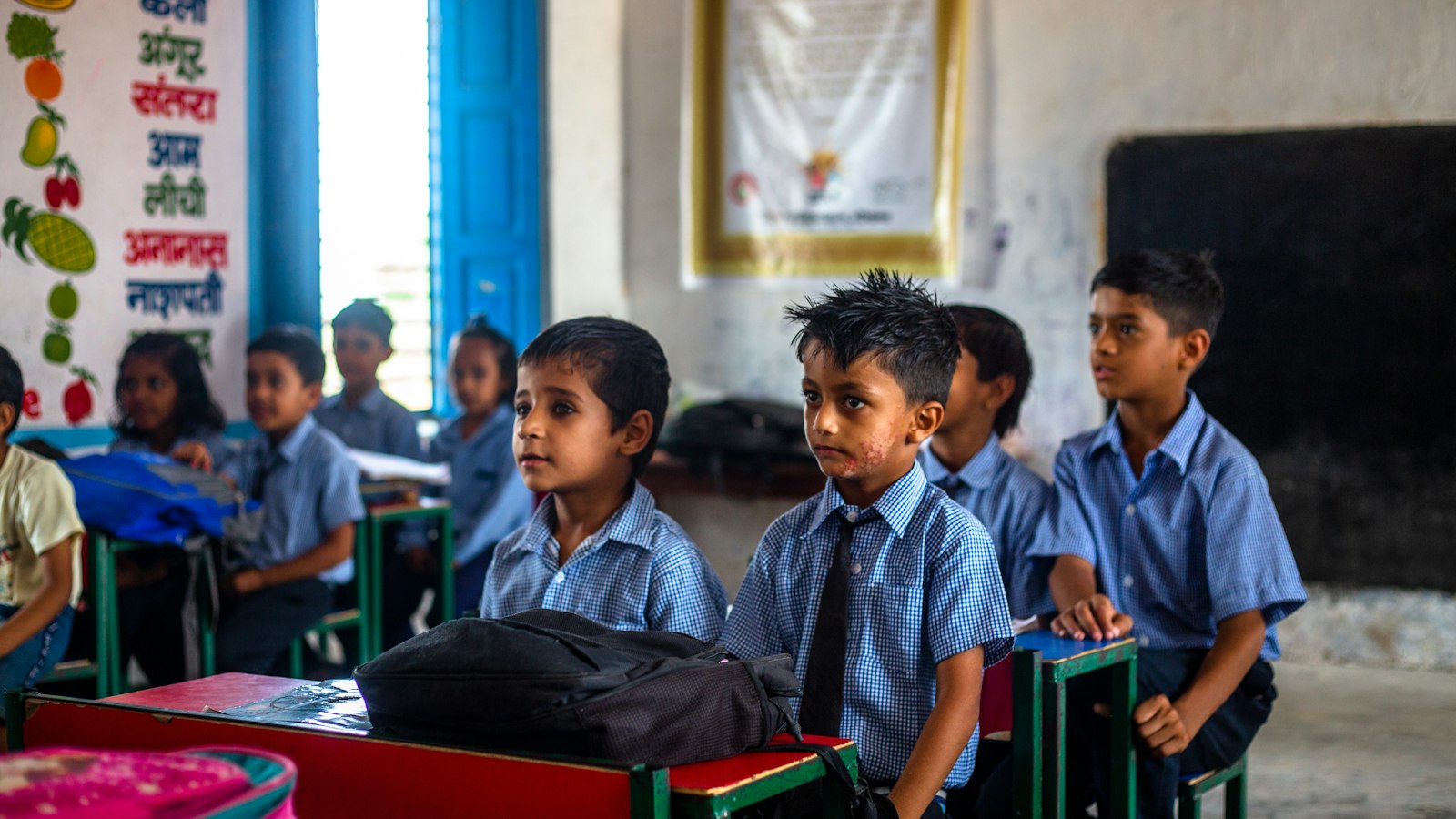
It was a November morning, the kind where the sky looks as though someone has rubbed an eraser over it. My Grade 3 class was deep into a unit on polar habitats. They could tell me exactly why polar bears were losing their ice, and they had made beautiful charts to prove it.
Then Aarav put up his hand. Not to answer my question, but to ask his own.
“Why can’t we go out for PE today?”
I explained that the air quality was poor and it wasn’t safe to play outside. He turned and looked out of the window for a long moment. Then he asked, “But who made the air like this?”
That one question was richer than anything I had written in my planner. And it made me wonder how many of our classrooms across India are full of rainforests, igloos and coral reefs, while the questions waiting right outside our windows go unasked.
There is nothing wrong with the wider world. The transdisciplinary themes were designed to be universal. But their real power comes when they are rooted somewhere our children know, and for our students that somewhere is just outside the school gate.
Why Faraway Units Feel Thin
My early years in teaching were spent in a Montessori environment, and one lesson from that training has stayed with me through Cambridge Primary and the PYP: children make meaning by moving from the concrete to the abstract. They need to hold, smell, pour, sort and see before the big ideas settle. The PYP asks for the same when it speaks of inquiry that begins with students’ own experiences.
But think about how many of our units actually begin. A video about penguins. A worksheet about the Amazon. The children ask one or two lovely questions, and then the energy fades, because there is nothing more to explore beyond what the teacher found online the night before.
And let us be honest, we teachers feel it too. When the topic is far away, we are often searching for answers at eleven at night, one step ahead of the class. When a child asks something unexpected, we gently steer them back to the planner. It isn’t a lack of skill. It is a lack of access.
Then comes the action part of the unit. When the issue sits thousands of kilometres away, action usually becomes a chart paper poster in the corridor. When the issue is the air, the water or the streets outside the classroom, children can observe it, talk to people it affects and suggest real changes their own school could make.
A Simple Test: See It, Touch It, Talk to Someone
Over the years, our team has settled on three simple questions whenever we consider a context for a unit.
See it
With their own eyes
Touch it
Real objects in hand
Talk to someone
People who live it
Strong context: at least two of three
Can the children see it? Not in a photograph, but with their own eyes. The winter haze over our northern cities. The waterlogged roads of a Mumbai or Chennai monsoon. The new Metro line rising above the traffic. If children pass it on the way to school, it is already part of their world.
Can the children touch it? Soil from the school garden. Vegetables from the local sabzi mandi. Clay diyas, a piece of block printed fabric, a kite with its string still tangled. For our little ones especially, curiosity often begins in the hands.
Can the children talk to someone involved? This is the one we most often skip. A Nani or Dadi who remembers how the family came to the city. Someone who works on the local train or the Metro. The shopkeeper at the corner who has watched the neighbourhood change over thirty years. These people carry knowledge none of us have, and most of them are just a phone call away.
Our rule of thumb is simple. A strong local context meets at least two of the three. For the Early Years, we try for all three. If a context meets none, it may still be worth exploring later, but perhaps not as the way into the unit.
Our Cities in Every Theme
Here are a few starting points drawn from cities across India. They are not finished units. Think of them as doors that teaching teams can open together and shape for their own city and their own grade.
Who We Are. Our big cities are cities of arrivals. Bengaluru, Hyderabad, Mumbai and Pune are home to families from every corner of the country, and almost every child has a story of someone who moved from somewhere else. Hang a large map of India in the classroom and ask families to mark where the grandparents were born. Watch it fill up over a week, and watch the questions begin.
Central idea: Where people come from shapes who they become.
Where We Are in Place and Time. Every city carries layers of history. The Partition shaped neighbourhoods in both Delhi and Kolkata. Mumbai was once seven separate islands. Chennai grew around Fort St George, and Hyderabad’s old city still gathers around the Charminar. Place an old black and white photograph of a local bazaar next to a photograph of the same place today and simply ask, “What changed, and why?”
Central idea: Movements of people change the character of a city.
How We Express Ourselves. Durga Puja pandals in Kolkata. Ganesh Chaturthi in Mumbai and Pune. The sky full of kites during Uttarayan in Ahmedabad. The Margazhi music season in Chennai. Bring a small object linked to a local celebration into class and ask the children where they have seen it and who they celebrated with. The stories that follow are usually full of family, food and colour.
Central idea: Communities express shared values through their traditions.
How the World Works. Every Indian city has weather that shapes daily life. The monsoon that floods Mumbai’s roads, the heat that closes schools early in summer, the winter smog in the north. Set up a simple rain gauge during the monsoon or hang white cloth squares outside in different months and let the children compare what they find. No video can do what that experience does.
Central idea: Natural and human processes interact to shape the environment we live in.
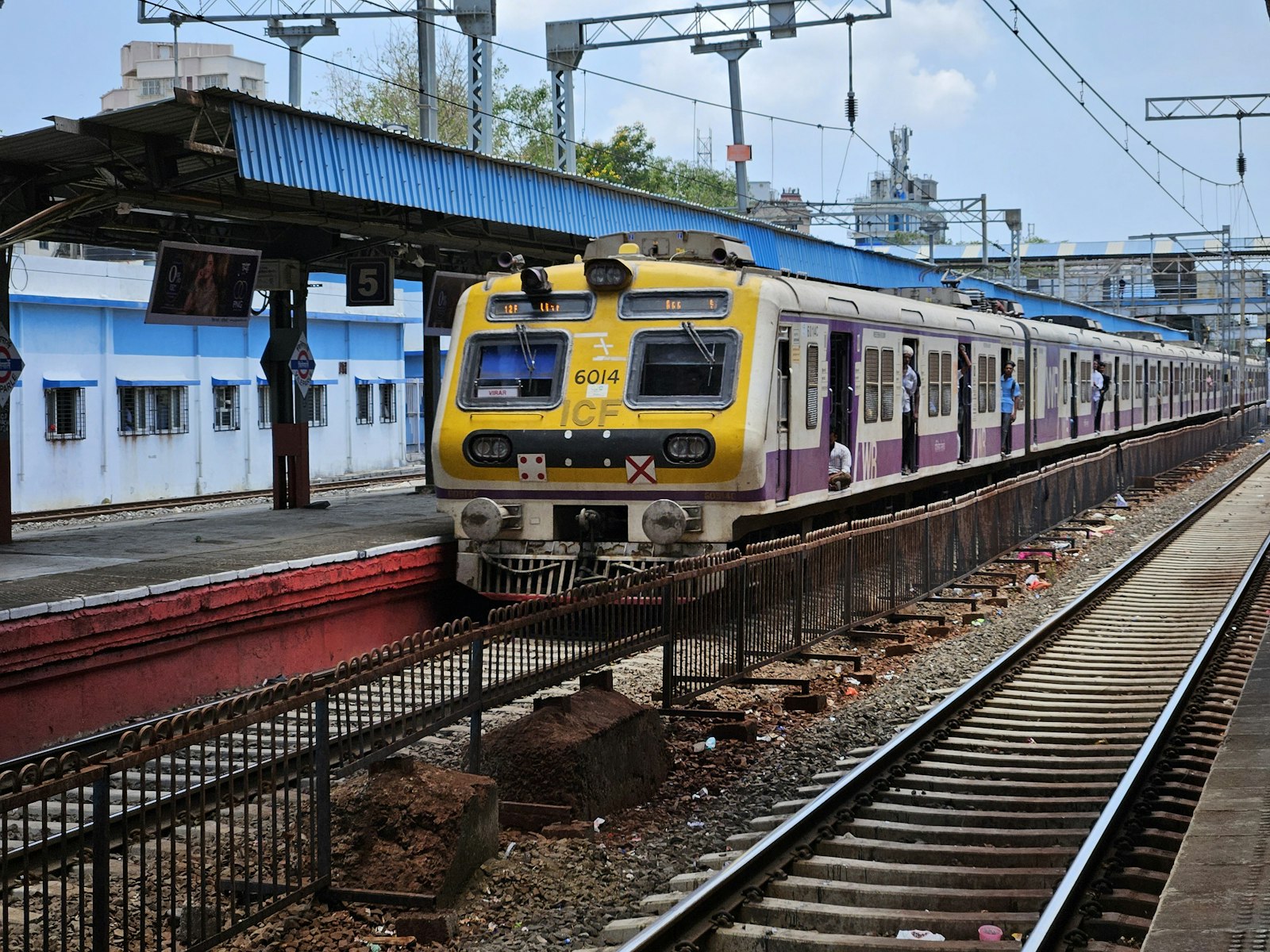
How We Organise Ourselves. Mumbai’s dabbawalas deliver lakhs of lunch boxes with remarkable accuracy. Local trains and Metro systems move huge numbers of people every day. Wholesale markets like Koyambedu in Chennai feed entire cities. Invite the children to crack the dabbawala coding system or plan a journey across the city on a Metro map. Suddenly systems, routes and connections become a puzzle worth solving.
Central idea: Systems help large populations meet their needs.
Sharing the Planet. The Hooghly, the Yamuna, the Sabarmati and the Musi. The lakes of Bengaluru and the mangroves along Mumbai’s coast. Show the children two photographs of your city’s river or lake, one from a cleaner stretch and one closer to home, and simply ask them to wonder.
Central idea: Human choices affect shared natural resources.
With Our Youngest Learners
With Nursery to Grade 1, the context can sit even closer to home. Instead of the whole city, begin with the school building, the lane outside or the child’s own house. This is where Montessori practical life work shines. Sorting classroom waste, watering the plants on a hot May morning and noticing puddles after the first monsoon shower are all real inquiries for a four year old. The city can come later. The habit of noticing comes first.
With Our Older Students
By Grades 4 and 5, children are ready for bigger and messier questions. The same river or lake can grow from “Why is the water dirty?” to “Who is responsible, and how are different people affected?” Inquiries like these become wonderful preparation for the Exhibition, because the children have already practised exploring a real issue with real people.
Two Pitfalls We Keep Returning To
These aren’t mistakes other people make. They are things my colleagues and I notice in our own planning, usually only once a unit is over and we are sitting with our chai, looking back. Naming them has helped us talk about them more honestly.
When the Experience Becomes the Unit
Whether it is a trip or a guest in the classroom, a firsthand experience can slowly take over a unit. The date gets fixed, the permission slips go home and before we know it, weeks of inquiry have turned into preparation for one morning.
A question that helps us during planning is: “What do our children want to find out, and who or what could help them?” Sometimes the answer is a visit to the riverside or a local lake. Sometimes it is a grandparent sitting in a circle with the class, sharing a story. Often it is both. Each opens a different door, and when children help shape these choices, the experience becomes part of the meaning they are building together. The time we leave afterwards, to talk, draw and revisit, is often where the real understanding takes root.
We also ask ourselves whether we are only choosing the famous version of our city. The monuments matter, of course. But so do the local market, the railway station and the streets the children walk every day. The everyday city often holds the richest questions.
Whose City Are We Inquiring Into?
Every classroom brings together children with different families, languages and everyday experiences of the city. When we choose a context, it is worth pausing to ask whose experiences we are drawing on, so that every child can find a little of their own world in the unit.
The PYP reminds us that knowledge is built together, and that includes the knowledge held by people beyond the school walls. A shopkeeper, a train driver or a neighbourhood elder each understands the city in ways we inside the classroom may not. When we invite them in as fellow inquirers, the central idea often shifts in ways we never planned for, and that is usually a good sign.
We can bring this question to the children too. Asking a class, “Whose voices have we heard so far, and whose are still missing?” turns a planning concern into a shared inquiry.
For Pedagogical Leaders: What Has Helped Us
In my experience, teachers are rarely short of ideas for local contexts. What they are short of is time and support. A few small things have made a big difference for us.
- A shared context bank. One simple document where teachers add local places, people and organisations that worked well, sorted by theme. No grade team has to start from scratch every year.
- A parent expertise directory. Our parent communities are full of architects, doctors, civil servants, artists and business owners. A short form at the start of the year can uncover partners we never knew we had.
- Protected planning time. Localising a unit needs one or two extra conversations. If the planning meeting only has time for filling in the planner, those conversations simply don’t happen.
- Trying it together in PD. A short session where teachers take one existing unit and try the see, touch and talk test together does far more than an hour long presentation on international mindedness.
One Question for Your Next Planning Meeting
None of this means rewriting the whole programme of inquiry. Just take the next unit on your planning calendar and ask your team one question:
What could our children see, touch or talk about within five kilometres of our school gate that connects to this central idea?
If the answer comes quickly, you may already have your provocation. If it doesn’t, that is worth sitting with as a team before the first lesson begins.
I often think back to Aarav at the window, staring at that grey November sky. He wasn’t asking me for a worksheet. He was asking me to help him understand the place he lives in. Whether our children grow up in Kolkata, Mumbai, Chennai, Bengaluru or Delhi, they spend every day in cities that are layered, colourful and full of stories. The curriculum is already there. Perhaps our work is simply to open the gate, together.
Further Reading
- Kath Murdoch, The Power of Inquiry (Seastar Education, 2015). A practical and warm guide to inquiry rooted in children’s curiosity and real contexts, much loved in PYP schools.
- Kath Murdoch, Getting Personal with Inquiry Learning (Seastar Education, 2022). Explores how children can shape their own inquiries, which connects beautifully with co-constructing contexts together.
- David Sobel, Place-Based Education: Connecting Classrooms and Communities (Orion Society, 2004). A short and readable introduction to using the local community as the starting point for learning.
- Gregory A. Smith and David Sobel, Place- and Community-Based Education in Schools (Routledge, 2010). Practical examples and frameworks for building school and community partnerships.
- International Baccalaureate, PYP: From Principles into Practice (2018). The IB’s own guidance on inquiry, agency and the programme of inquiry, available to IB World Schools through the Programme Resource Centre.

Comments on your Post
On “Our City Is Already a Curriculum: Finding the Local Context in Every Transdisciplinary Theme”